
Learn how the Verse Community will help developers and individuals through initiatives, occasions, and tasks that grow Bitcoin.com’s Verse ecosystem. Learn about Bitcoin.com’s official token, ways to earn it, and tips on how to use it in the Bitcoin.com ecosystem and beyond https://www.xcritical.in/. Sign up for free on-line programs masking the most important core matters in the crypto universe and earn your on-chain certificate – demonstrating your new information of major Web3 subjects.
Moreover, the permissionless nature of those swimming pools eliminates the necessity for intermediaries or cumbersome approval processes, empowering individuals to engage directly with the market. Constructing a liquidity pool contract calls for strategic planning to facilitate efficient what is crypto liquidity and secure decentralized buying and selling. Market makers, people, or organizations that often supply purchase and sell orders for a certain asset, are one of the main primary sources.
- When somebody sells token A to purchase token B on a decentralized exchange, they rely on tokens in the A/B liquidity pool offered by other users.
- Addressing these challenges will unlock the complete potential of decentralized finance, fostering an inclusive and interconnected crypto ecosystem.
- Moreover, the permissionless nature of those pools eliminates the need for intermediaries or cumbersome approval processes, empowering people to have interaction directly with the market.
- Liquidity providers are just like the lifeblood of financial markets as a outcome of they play a key position in guaranteeing the provision and stability of liquidity.
- The first user is ready to buy the asset earlier than the second person, and then sell it again to them at a better value.
They increase liquidity by reducing bid-ask spreads, enabling merchants to complete trades more quickly. Simply stated, it denotes the ability to remodel investment into cash rapidly and at an affordable value. It is important for the graceful operation of markets as a result of it allows participants to enter and exit positions expeditiously, lowering transaction costs and market volatility. The purpose this is considered a risk is that there’s all the time the potential that the worth of the underlying asset might lower and never recover. This is why it is highly recommended to solely put cash into liquidity swimming pools which were audited by a reputable firm, thus decreasing the chance of partaking with a weak good contract.
How Much Do Liquidity Providers Earn From Liquidity Pools?
This aggregation of liquidity enhances market depth, ensuring enough funds are available to facilitate trades and reduce value slippage. Additionally, Liquidity Pools promote market effectivity by eliminating order guide limitations. Instead of relying solely on order matching, participants can trade instantly from the pooled liquidity. The constant product formulation, exemplified by platforms like Uniswap, revolutionizes price discovery and pool balance upkeep. This algorithmic method ensures a continuous product of reserves in a liquidity pool, permitting for efficient buying and selling with out relying on centralized intermediaries. Despite the dangers, liquidity provision could be worthwhile for these keen to handle and mitigate potential downsides, making it an integral part of decentralized finance ecosystems.
But the mannequin has run into an analogous problem—investors who simply need to money out the token and leave for other alternatives, diminishing the boldness within the protocol’s sustainability. Liquidity pools function in a competitive surroundings, and attracting liquidity is a tricky recreation when investors continuously chase high yields elsewhere and take the liquidity. Liquidity in DeFi is often expressed by method of “total worth locked,” which measures how much crypto is entrusted into protocols. As of March 2023, the TVL in all of DeFi was $50 billion, according to metrics website DeFi Llama.
This is the risk that the good contract that governs the pool may be exploited by hackers. The property within the pool are analogous to the lemonade machines, and the customers who provide those belongings are like the chums who invested within the enterprise. DeFi, or decentralized finance—a catch-all term for monetary providers and products on the blockchain—is no different. Interoperability and cross-chain liquidity are pivotal future developments in crypto, yet in addition they current vital challenges. With the proliferation of diverse blockchain networks, enabling seamless communication and switch of belongings throughout chains turns into imperative. Regular audits help determine and rectify vulnerabilities, making certain sensible contracts perform as supposed and reduce the danger of exploits.
Implementing sturdy safety measures like code evaluations, formal verification, and bug bounties fosters trust and safeguards the decentralized ecosystem. Usually, a crypto liquidity provider receives LP tokens in proportion to the quantity of liquidity they have provided to the pool. When a pool facilitates a commerce, a fractional payment is proportionally distributed amongst the LP token holders. For the liquidity provider to get again the liquidity they contributed (in addition to accrued fees from their portion), their LP tokens must be destroyed. This market order value that’s utilized in instances of high volatility or low volume in a conventional order book mannequin is set by the bid-ask spread of the order guide for a given trading pair. This means it’s the center point between what sellers are willing to promote the asset for and the price at which patrons are willing to purchase it.

MoonPay additionally makes it straightforward to promote crypto when you determine it is time to money out, including a quantity of tokens talked about in this article like ETH and USDC. Simply enter the quantity of the token you’d prefer to promote and enter the small print where you wish to receive your funds. To get started on your liquidity pool journey, merely buy crypto by way of MoonPay utilizing a card, cellular fee technique like Google Pay, or bank transfer. In a bear market, on the opposite hand, the risk of impermanent loss could be far higher due to the market downturn.
Kyber Network Crystal
By offering a seamless experience and selling sustainable liquidity, Convexity Protocol has gained recognition as a leading platform within the thriving ecosystem of liquidity protocols. Liquidity swimming pools enhance market liquidity by permitting for extra environment friendly worth discovery, lowering slippage, and increasing market liquidity. They also make it simpler to make loans and earn passive revenue via yield farming and liquidity mining. Liquidity swimming pools are meant to switch traditional order books by instantly matching buyers and sellers throughout the protocol. They are the backbone of DeFi platforms, bringing collectively people eager to produce their assets and other people trying to commerce or borrow these assets. In financial markets similar to foreign exchange markets, stock markets, bond markets, there must be some mechanism for providing liquidity in order that commerce within the asset can take place.

As the DeFi landscape matures, liquidity swimming pools will probably become extra refined, providing revolutionary options and strategies to optimize capital efficiency. We can count on the emergence of cross-chain liquidity pools, enabling seamless interoperability between totally different blockchain networks. Additionally, integrating advanced smart contract functionalities and algorithmic market-making methods will enhance the efficiency and profitability of those swimming pools.
What Are Liquidity Pools?
It allows users to create and handle liquidity swimming pools with multiple tokens, enabling dynamic asset allocation. With its customizable weightings and self-adjusting mechanisms, Balancer allows customers to rebalance their portfolios mechanically, making certain optimal performance. Furthermore, DeFi liquidity pools have facilitated the creation of revolutionary monetary devices, such as decentralized exchanges and lending protocols. These protocols rely on the liquidity the swimming pools present to enable peer-to-peer trading and lending, lowering reliance on conventional intermediaries and enhancing efficiency.
A liquidity pool is a set of digital belongings amassed to allow buying and selling on a decentralized change (DEX). They are created when users lock their cryptocurrency into smart contracts that then enables them to be used by others. These are decentralized protocols that simplify the creation and functioning of liquidity swimming pools in the context of decentralized finance (DeFi) platforms. AMMs employ mathematical algorithms to routinely execute trades between a number of property by making certain that there’s a stability between the provision of tokens in the liquidity pool. A liquidity pool is a collection of funds locked in a sensible contract on a decentralized finance (DeFi) community. It is a cornerstone of DeFi since it provides a supply of liquidity for users to change and interact with numerous digital property.
Striking a balance between innovation and regulation is essential to foster belief and widespread adoption. Compliance with evolving rules and tips might be important for crypto businesses to navigate this altering panorama efficiently. For instance, for instance you need to create a pool that accommodates the trading pair ETH/USDC. An impermanent loss may also occur when the price of the asset increases tremendously. This is principally seen on networks with sluggish throughput and swimming pools with low liquidity (due to slippage).
A decentralized change (DEX) is a kind of change that makes a speciality of peer-to-peer transactions of cryptocurrencies and digital assets. Unlike centralized exchanges (CEXs), DEXs do not require a trusted third get together, or intermediary, to facilitate the change of cryptoassets. And in 2018, Uniswap, now one of many largest decentralized exchanges, popularized the general concept of liquidity pools. Likewise, establishing cross-chain liquidity necessitates trustless mechanisms that facilitate efficient asset swaps, ensuring liquidity move across various networks. Addressing these challenges will unlock the total potential of decentralized finance, fostering an inclusive and interconnected crypto ecosystem.
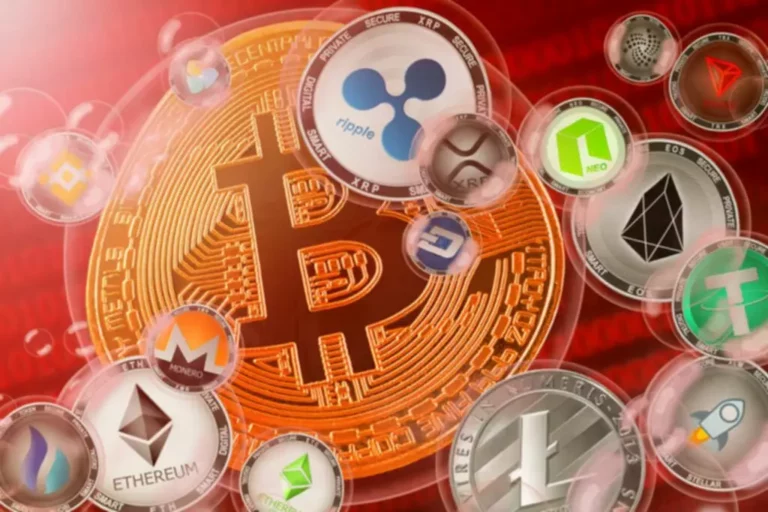
Many people use liquidity pools as a financial tool to take part in yield farming (also known as “liquidity mining”). Simply put, yield farming is the method of offering liquidity to a pool in order to earn a portion of the fees that are generated from trading exercise. The primary objective of liquidity swimming pools is to facilitate peer-to-peer (P2P) buying and selling on DEXs. By offering a steady supply of consumers and sellers, liquidity pools ensure that trades can be executed rapidly and efficiently. Liquidity pools are created when customers (called liquidity providers) deposit their digital assets into a sensible contract.
Nonetheless, members ought to pay attention to the dangers and warning when partaking with these new liquidity mechanisms. A liquidity pool is a great contract where tokens are locked for the aim of offering liquidity. Some of the important concepts required to understand how liquidity swimming pools and decentralised exchanges work embody liquidity suppliers, liquidity tokens and automated market makers. To create a better buying and selling experience, various protocols provide even more incentives for users to provide liquidity by offering extra tokens for explicit “incentivized” swimming pools. Participating in these incentivized liquidity swimming pools as a provider to get the utmost amount of LP tokens known as liquidity mining. Liquidity mining is how crypto trade liquidity providers can optimize their LP token earnings on a particular market or platform.
Its efficient order-matching engine and deep liquidity swimming pools guarantee optimum trading circumstances. Curve Finance is a liquidity protocol built on Ethereum that optimizes stablecoin buying and selling. By leveraging automated market makers (AMMs) and low slippage, Curve offers environment friendly and cost-effective swapping of stablecoins with minimal impermanent Loss. Its distinctive design caters to the needs of DeFi users, particularly those engaged in yield farming and stablecoin buying and selling strategies. In the early phases of DeFi, DEXs suffered from crypto market liquidity problems when making an attempt to mannequin the traditional market makers.
How Liquidity Pool Works
This is pretty much what occurs with rug pulls, however it might possibly also happen naturally if the market doesn’t provide enough liquidity. Liquidity pools have emerged as a revolutionary idea in decentralized finance (DeFi), offering a decentralized and efficient solution to the age-old liquidity downside. These pools have important implications for the monetary ecosystem, bringing forth numerous benefits and opportunities for participants.
For occasion, if you’re minting a hyped NFT assortment alongside several others, then you’d ideally want your transaction to be executed earlier than all the property are bought. Regulatory issues and compliance current significant future developments and challenges within the crypto area. As the trade continues to develop, governments worldwide strive to establish frameworks to address issues like cash laundering, investor protection, and market stability.
Overcoming these challenges will pave the greatest way for a more scalable and efficient crypto ecosystem. To mitigate these risks, LPs employ varied methods like diversifying their portfolios, utilizing hedging techniques, and actively monitoring market conditions. Constant evaluation and adaptation of risk administration strategies become crucial to ensure the steadiness and sustainability of liquidity swimming pools amidst worth fluctuations and market uncertainties. This newfound inclusivity empowers retail investors to contribute liquidity actively, earn rewards, and partake in decentralized finance, fostering a extra equitable and inclusive monetary landscape.